Oracy
"When we develop the ability to do such things [speak] with confidence and flair, it is utterly transformative. It changes the way we feel about ourselves. It changes the way in which other people see us."
Oracy Cambridge
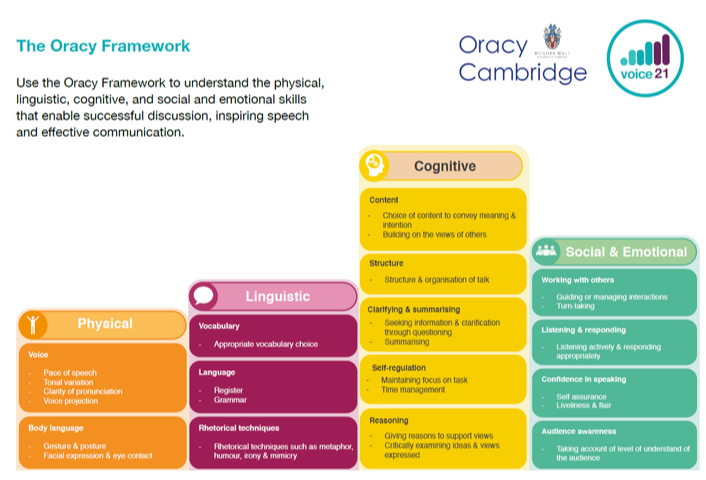
Oracy Cambridge and Voice 21 make the distinction that there are two aspects to oracy.
- Learning through talk: Class teachers use talk effectively for teaching and learning, known as dialogic teaching, teacher’s model their own oracy skills and involve the children in their own learning, using talk throughout lessons to engage children.
- Learning how to talk: teaching children how to use spoken language and developing children’s spoken language skills.
Beginning in Early Years, we support children to develop strong oral communication skills enabling them to express themselves clearly, articulate their thoughts and ideas, and engage in meaningful interactions with others. These skills are essential for success in both academic and social contexts.
As the children move through school, they engage in discussions, debates, and verbal reasoning activities. These help them to develop critical thinking and problem-solving skills. Through verbal exchanges, children learn to analyse information, evaluate different perspectives, and construct logical arguments—an essential skill set for academic success and lifelong learning. We incorporate drama activities where pupils can act out scenes from stories, plays, or historical events, allowing them to practice articulation, expression, and voice modulation.
Children from Reception to Year 6 have the opportunity to perform on stage for audiences every year, participating in drama activities that require them to take on different roles and improvise dialogues. They’re encouraged to use expressive language, gestures, and voice modulation to convey emotions and communicate effectively.
Through Scripted Performances, we provide opportunities for our pupils to rehearse and perform scripted plays or scenes. We encourage them to focus on delivering lines clearly, projecting their voices, and maintaining eye contact with the audience.
We provide a comprehensive Mental Health & Wellbeing offer at Springcroft which focuses on children’s Social and Emotional Development. Developing strong spoken language skills empowers children to express their feelings, empathise with others, and resolve conflicts constructively. These skills contribute to their social and emotional well-being and support their ability to collaborate and cooperate with peers.
Oracy in Group Work
Children have opportunities across the curriculum to participate in collaborative problem-solving. Examples such as assigning group tasks or projects that require pupils to collaborate and communicate effectively to solve problems or complete assignments. Teachers encourage pupils to discuss ideas, share resources, and delegate tasks within their groups.
Class teachers facilitate group discussions on relevant topics or themes related to the curriculum. Providing pupils with guided questions or prompts to stimulate conversation and ensure that all group members have opportunities to contribute their ideas and perspectives.
The Oracy Skills Framework- Oracy Cambridge