Sports Premium
Springcroft Primary School
The Use and Impact of Sports Premium
Sports Premium
What is the Sports Premium?
Since 2013, the Government has provided ring-fenced annual funding — jointly from the Departments for Education, Health and Culture, Media and Sport — for primary schools to spend solely on improving the quality of sport and PE provision.
How Springcroft uses the funding
At Springcroft, funding is used so that every child benefits regardless of sporting ability: our most able children access advanced competition, children who aren't naturally "sporty" get the chance to try something new, and staff receive ongoing training in PE.
Sports Premium funding for the 2025/2026 academic year.
We receive £16,340, spent as follows:
| Item | Purpose | Cost |
|---|---|---|
| Time4Sport coaching & CPD | CPD for all staff | £14,085 |
| KS2 swimming | All KS2 children access swimming | £3590 |
| CADSSA membership | Competitive sport participation | £185 |
| PE equipment | Replacement/purchase/maintenance | £5350.35 |
| Transport & facility hire | Travel to venues, medals, equipment | £2940 |
Springcroft supplements this funding from its own budget to extend the range of experiences on offer.
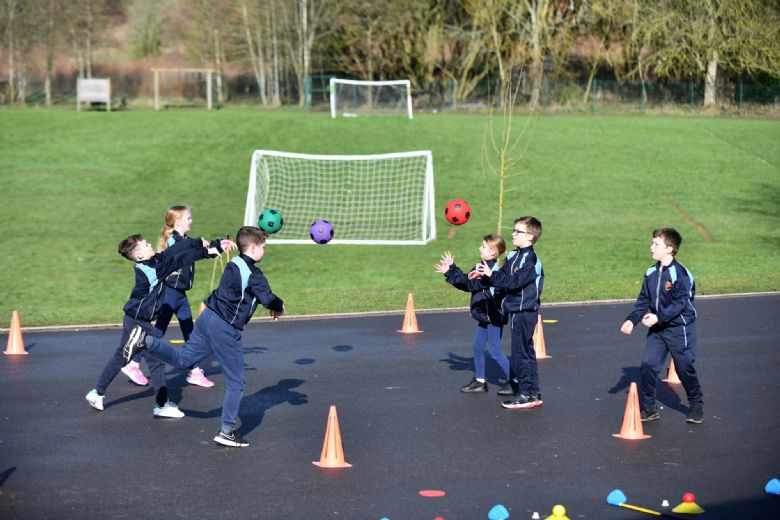
Through Time4Sport, our staff have observed lessons and worked alongside qualified coaches, strengthening our own PE teaching so provision remains strong even if funding levels change. Children access gymnastics, tennis, dance, dodgeball, athletics and more, plus lunchtime multi-sports clubs and after-school sport-specific clubs.
As members of Cheadle and District School Sports Association (CADSSA), a network of 14 primary schools, our children compete across ten sports each year, including athletics, cricket, football, netball, rounders, swimming and tag rugby — alongside cluster events run by Blythe Bridge High School. Other experiences include tag rugby at Longton Rugby Club, a Chance to Shine cricket tournament at Meir Heath Cricket Club, Handball at Fenton Manor and athletics at Northwood Stadium.
Measuring impact
We evaluate impact through pupil questionnaires, pupil voice, staff feedback and our normal self-evaluation arrangements — looking at participation levels, confidence and self-esteem, alongside progress in PE itself.